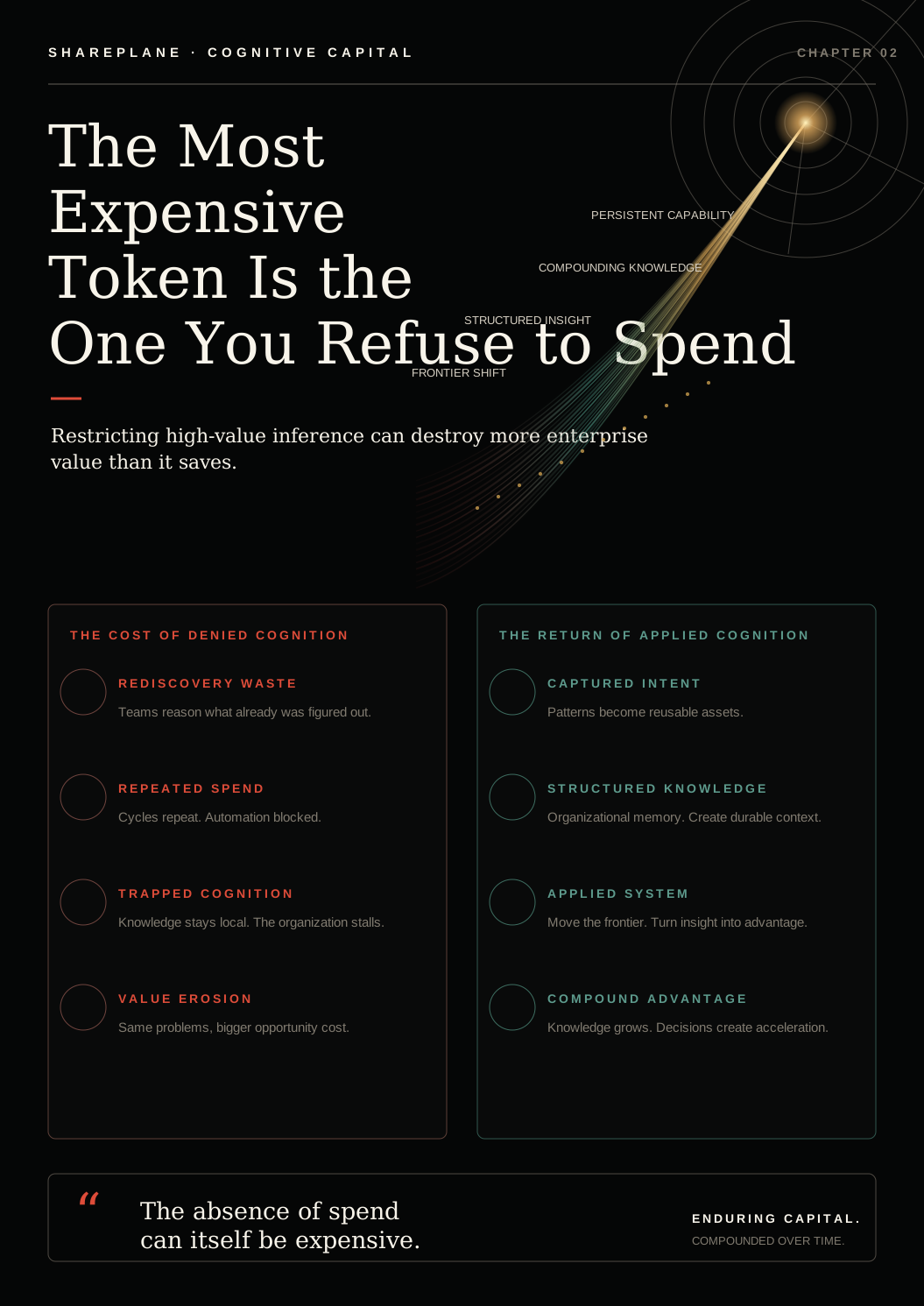
The easiest AI cost to report is the cognition you prevented. The harder cost is the capability, information, risk reduction, and option value that never entered the system.
The visible saving is not the whole economic event.
A quota can save $X of inference and still destroy far more value if the blocked work would have closed a security gap, documented a critical system, produced a reusable test suite, or eliminated external consulting dependence.
Denied cognition has multiple cost channels.
- Delay cost: useful work arrives later.
- Rediscovery cost: the same cognition is purchased again.
- Risk-retention cost: vulnerabilities, weak controls, or unknown dependencies remain.
- Substitution cost: the organization later purchases contractors, consultants, or other services.
- Rework cost: teams continue working around missing architecture or evidence.
- Option loss: experiments that could have eliminated bad paths or revealed better ones never happen.
- Compounding opportunity loss: the missing artifact cannot help any future work either.
Inference denial can destroy option value.
A bounded experiment is not valuable only when it succeeds. Failed prototypes can expose assumptions, eliminate architecture paths, reveal missing controls, and narrow the search space. Refusing the experiment can preserve ignorance.
This thesis balances Inference Retirement.
Established paths should stop buying the same cognition repeatedly. That does not mean frontier cognition should be starved. The combined law is: retire repeated reasoning where the system already knows, and fund reasoning where uncertainty, change, or opportunity still justify it.
IADC = delay + rediscovery + retained risk + substitution + rework + option loss + compounding opportunity lossFlat throttles optimize the wrong variable.
A fixed credit pool ignores whether the next unit of cognition has strongly positive expected marginal value. Cost control should target waste, not terminate useful work at an arbitrary entitlement boundary.
The countercase is real.
Unlimited inference can create artifact sprawl, orchestration theater, weak validation, security exposure, and review burden. The argument is for positive marginal return inside a governed envelope, not infinite spend.
Know when to stop.
Stop when additional reasoning mostly repeats prior outputs, raises validation burden faster than useful information, breaches the risk envelope, or has no credible path to durable value.
If broader access mostly produces low-value output, higher review burden, or little evidence that denied work later creates cost or risk, the denied-cognition thesis weakens.
Cost control should prevent waste, not prevent cognition with positive expected value.
Continue the thinking.
Retire repeated cognition on established paths without starving ambiguity-frontier work.
Complements / challengesThe Most Expensive Model Is Often Compensation for Missing ControlOne warns against solving weak control with expensive models; this Work warns against preserving larger liabilities by refusing useful cognition.
Continue nextSame Tokens. Different Returns.Once cognition is available, the next question is why equal access produces unequal outcomes.