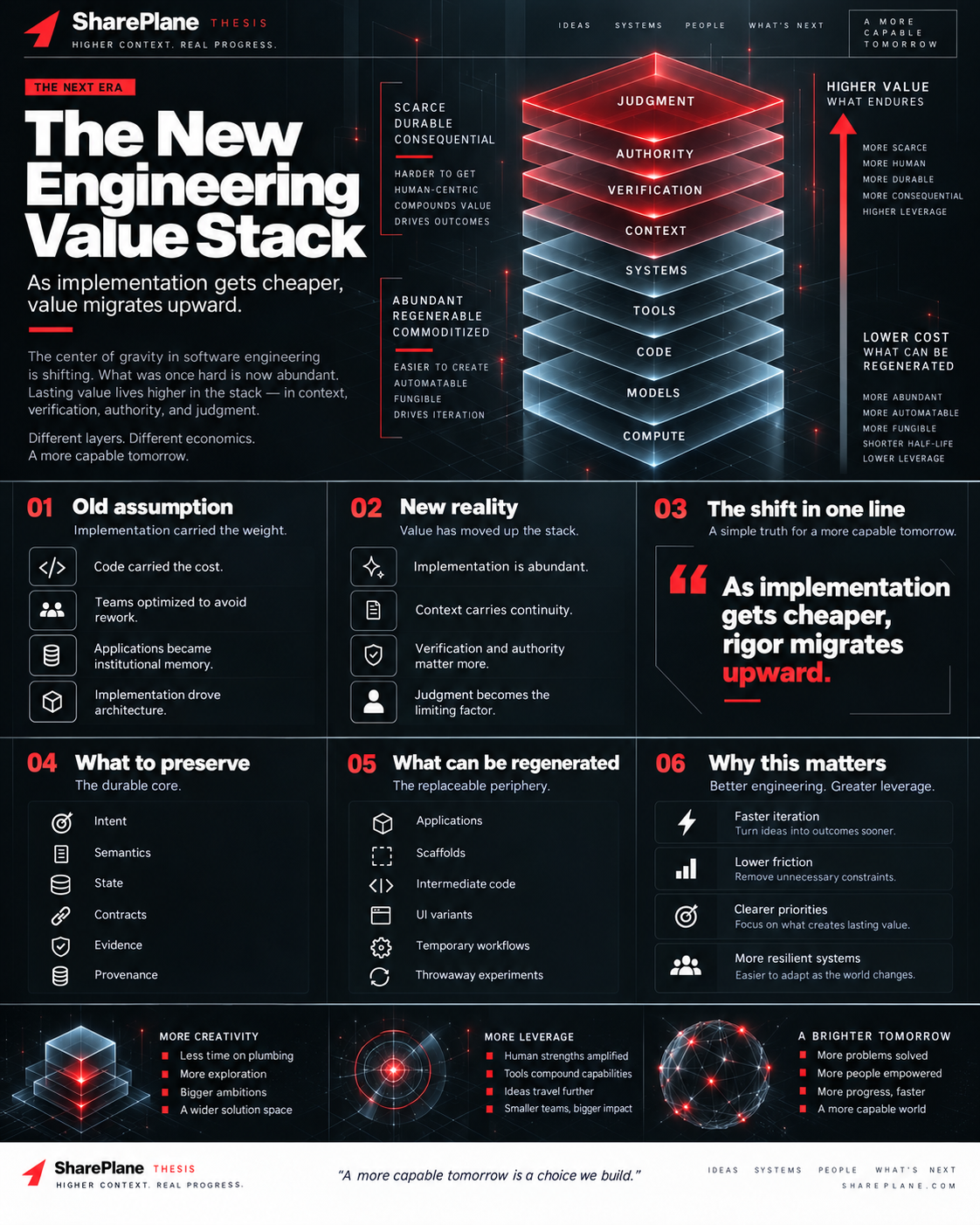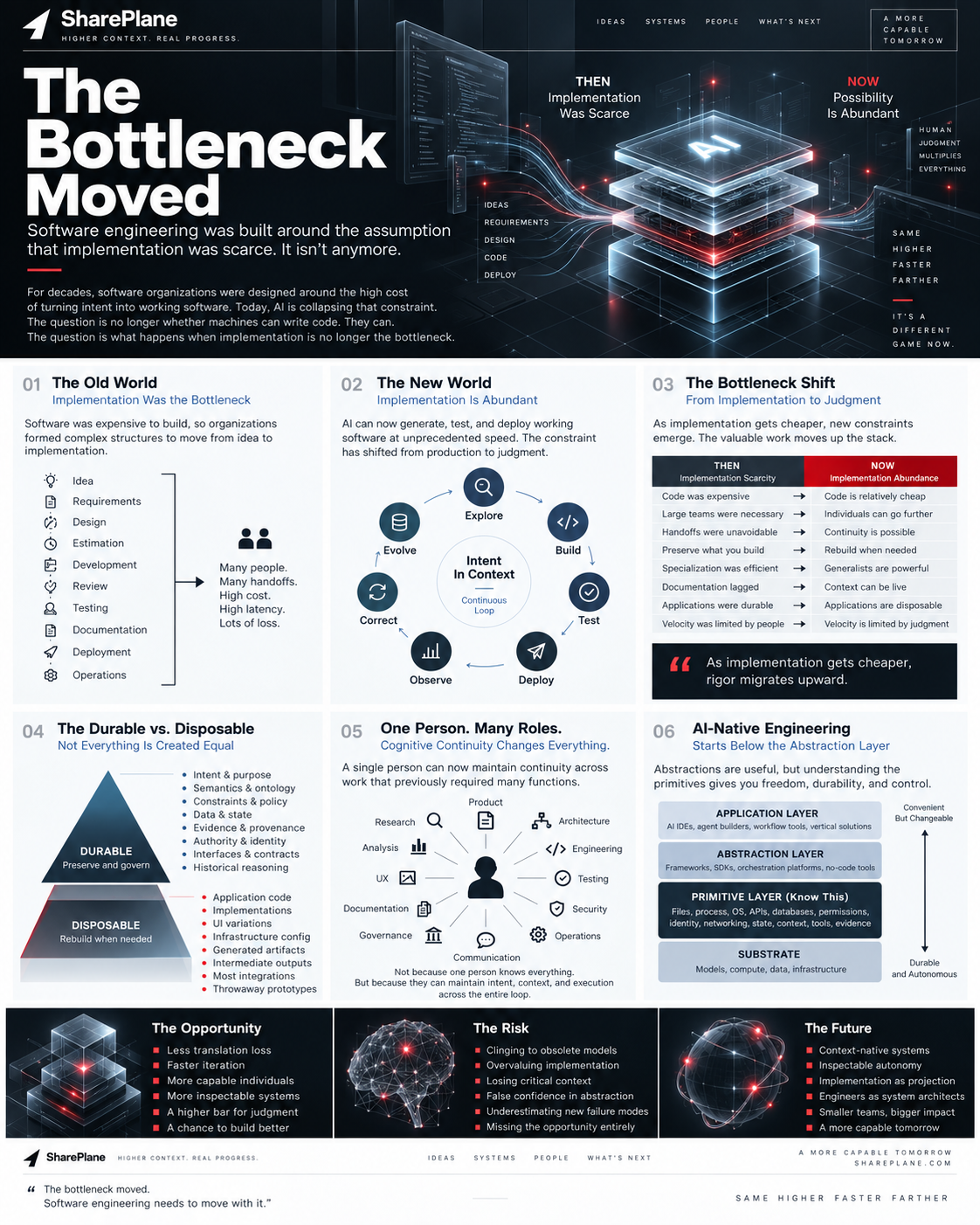
The old bottleneck was implementation.
For most of my career, I would have rejected the idea that software developers were becoming unnecessary. Not because software development was sacred. Because software was hard.
Taking an idea from somebody’s head and turning it into something useful, reliable, secure, supportable, understandable, deployable, and maintainable required enormous amounts of human effort.
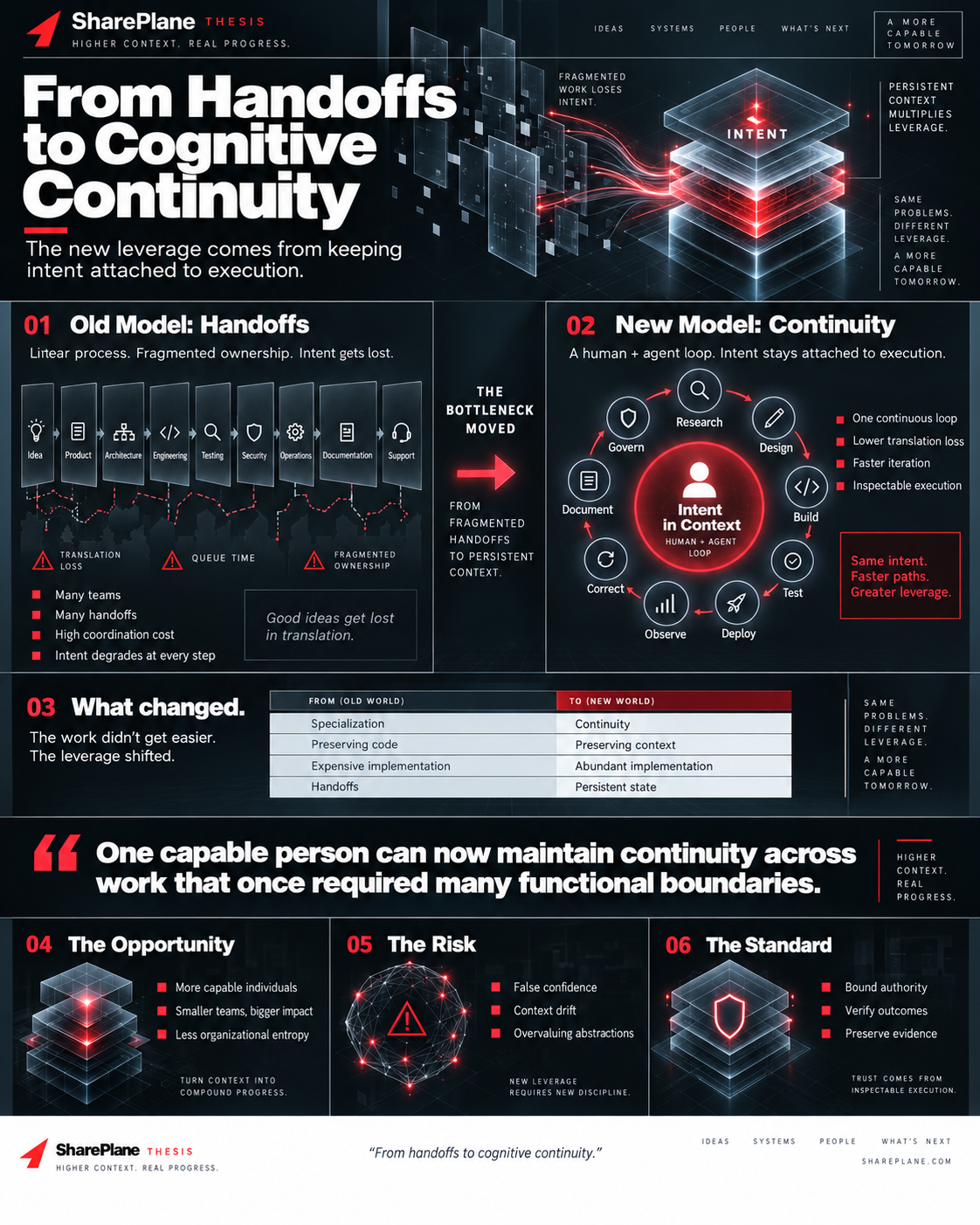
You needed people who could translate requirements. People who could design systems. People who could write code. People who could test it. People who understood infrastructure, security, deployment, operations, and the peculiar archaeology required to explain what everybody else had built.
Then you needed meetings so all those people could explain their portion of reality to one another.
That was not stupidity. It was an adaptation to scarcity. Implementation was expensive. The organization formed around that constraint.
I no longer think that constraint can be assumed.
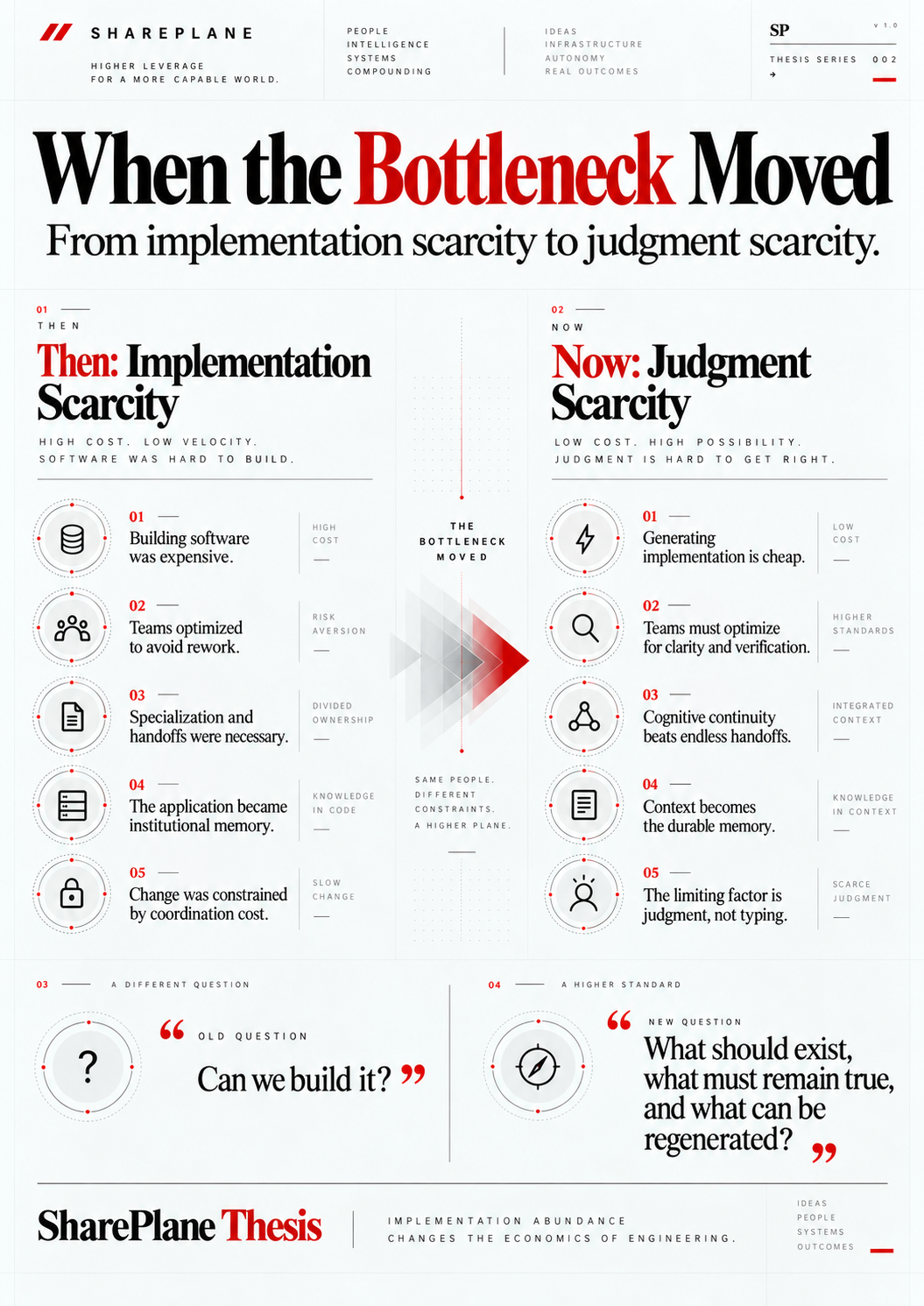
This is not about whether AI can code
That argument is already boring.
Models can write code. They can write bad code. They can write excellent code. They can misunderstand requirements, invent APIs, recover from mistakes, refactor entire systems, diagnose failures, write tests, operate tools, inspect environments, create repositories, build interfaces, manipulate infrastructure, analyze evidence, and occasionally find extraordinarily creative ways to screw something up.
So can people.
The interesting question is no longer whether an AI can produce software. The interesting question is what happens when producing software is no longer the expensive part of software engineering.
That is a different problem.